On a new Indigenous-led walking tour in Whistler, we discovered how the smell of skunk cabbage serves as an alarm clock for hibernating bears, how devil’s club plants are used for pain relief, and how a palms-up gesture means “thank you, I see you, I understand you.”
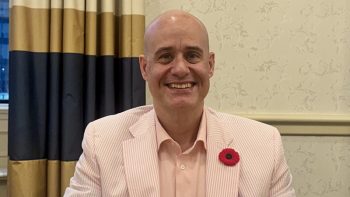
A few hours later, Intrepid Travel Canada President Christian Wolters revealed the results of an Angus Reid survey the Australian company commissioned in July.

“We see there's a there's a really big gap because Canadians — and also international travellers — they really want this type of experience but maybe they're afraid or they don't know how or they just don't know where to look for experiences like this,” Wolters said at a media dinner at Whistler’s 21 Steps Kitchen + Bar event space.
In January, Intrepid Travel pledged $500,000 over five years to support Indigenous tourism development and promotion in Canada.
“Intrepid is a very powerful company in the sense that we get thousands and thousands of passengers each year, and we can bring them to different parts of the world. But what we can do best is partner with Indigenous-led companies and get these people experiencing these types of incredible tours.”
Open Jaw was in Whistler, B.C. to preview We Are the Land, a walking tour created by Talaysay Tours for Intrepid’s 10-day Grand Canadian Rockies routes From Vancouver to Calgary in 2027.

Founded in 2002, Talaysay Tours is owned and operated by Candace Campo and her daughter Talaysay Campo, who are Shíshálh (Sechelt) and Sḵwx̱wú7mesh (Squamish) Nation members. The cultural tourism company creates meaningful experiences rooted in story, culture and connection to place in Vancouver, Squamish, Whistler and the Sunshine Coast.
“I think this partnership is building a modern-day potlatch,” Talaysay Campo told us.
“The word potlatch means to give, but it also means community. We are sharing our story not just of the beautiful territory here in Turtle Island (also known as Canada), but sharing our teachings of oral history throughout Indigenous tourism throughout Canada.”
Campo noted that Indigenous tourism makes up 5% of Canada’s tourism — a low number she attributes to the legacy of residential schools and the fact the Canadian government outlawed potlach gatherings/ceremonies from 1885 to 1951 to force assimilation.

“We didn't start from level zero — we started from over minus 1,000,” said Campo. “So we're just trying to make back our cultural teachings day by day. And having this partnership and having support from Intrepid, I'm immensely grateful and I’m looking forward to this next chapter together.”
An Angus Reid survey (English and French) on behalf of Intrepid Travel polled 1,507 Canadian adults between July 24 and 28 and found that:
- More than half (57%) of Canadians are keen to try Indigenous-led tourism experiences, but fewer than one in five (18%) have done so.
- 71% would enjoy learning about Indigenous cultures while travelling.
- 43% would be more likely to choose a Canadian trip that includes an Indigenous-led tourism experience.
The biggest barriers to connecting to Indigenous-led tourism are visibility, familiarity and confidence.
- Among Canadians who have never done Indigenous-led experiences, 42% hadn’t come across any while planning a trip and 30% said they don’t know where to find one.
- 76 per cent are unfamiliar with the Indigenous-led tourism experiences available in Canada (including 44 per cent who didn’t know these experiences existed).
- 63% say they don’t know enough about Indigenous tourism to know where to begin.
- 54% aren’t confident about finding and choosing an experience.
- 24% are unsure which experiences are genuinely Indigenous owned or led.
- 42% worry about unintentionally being disrespectful.
Research points to relatively little outright rejection. Among those polled who had never done Indigenous tourism experiences, only 15% said they weren’t interested and just 8% felt expense was a barrier.

For the travel industry, this creates an opportunity to make Indigenous-led tourism a more visible part of the trips that Canadians are already considering.
To preview We Are the Land, we met Talaysay Tours at the Lost Lake PassivHaus near car-free Whistler Village and walked about 3 km along a paved forest trail while learning about traditional plant medicines, salmon, cultural ecology, land stewardship and how Indigenous people have always been “caretakers of the land.”

Before looping back, we stopped in Lost Lake Park to drink Talaysay’s “hush tea” made from locally harvested nootka rose, licorice fern and stinging nettle combined with peppermint.
“I want to see more Indigenous tourism,” Campo declared. “We are starting right now, and I hope in these next few years we're going to expand from this ripple effect. And I just want to thank you so much for all being here today. It warms my heart.”
Wolters called Indigenous-led tourism “the cornerstone of responsible tourism in Canada.” Launching this tour means that 75 per cent of Intrepid’s tours in Canada now have an Indigenous component, and he revealed his goal is 100 per cent by 2031.

After the tour, we walked over to the Squamish Lil’wat Cultural Centre to lunch on salmon chowder, venison chili and bannock (Indigenous fry bread) at the Thunderbird Café, and then explore the art, history and living cultures of the Squamish and Lil’wat Nations. A visit to the cultural centre is also part of Intrepid’s Grand Canadian Rockies adventure.