Toronto’s record‑breaking winter storm over the weekend forced Air Canada into a massive but carefully choreographed operational reset, as the carrier moved planes and people around the globe to keep its network safe and recoverable.
With 46 centimetres of snow recorded at Toronto Pearson on Sunday – the airport’s snowiest day on record – Air Canada proactively cancelled hundreds of flights and repositioned aircraft away from its main hub to give ground crews and airport authorities room to work.
Tom Stevens, Air Canada’s Vice‑President, Customer Experience and Service Operations, says the airline’s storm playbook started almost a week before the first flakes fell. Planners began tracking the system in long‑range forecasts last Tuesday, recognizing that this was not a single‑airport event but a sprawling storm affecting much of North America, including key airports in the U.S. Northeast and the carrier’s largest hub in Toronto. The strategy, he explains, was to be highly proactive and give both customers and the trade as much certainty as possible about what would and would not operate.
On Sunday, as Pearson was pummelled by its historic snowfall, Air Canada cancelled 468 flights across its network, with a significant share of those cuts focused on the U.S. Northeast. To keep Pearson’s “concrete” as clear as possible for plows and de‑icing operations, the airline deliberately kept aircraft away from Toronto.
In all, 71 aircraft were left at airports around the world so that, once the snow stopped around midnight into Monday, snowplows could work unimpeded and set up a more reliable start to the new operating day.
That meant leaving many international widebodies at their destinations, including cities such as Dubai, London Heathrow and Frankfurt, and keeping crews down for an extra night so they could fly home once conditions improved.
The guiding philosophy, Stevens says, is to cancel early and proactively so the airline can stage an orderly recovery rather than fight rolling disruption in real time.
Ahead of a major weather event, the airline meets with airport authorities, who model how much flying the airport can safely handle given snowfall rates, runway‑clearing cycles and the throughput of de‑icing bays.
The de‑icing facilities are a critical constraint: the number of aircraft that can be sprayed per hour directly determines how many flights can depart.
Ramp work, baggage handling and all ground operations take longer in snow and bitter cold, Stevens points out. The airline must look realistically at how many flights its teams can handle in those conditions. That is why customers still see cancellations even after the snow has stopped: temperatures remain extremely low, surfaces are slick and the priority is to resume flying safely, not simply quickly.
Despite the scale of the disruption and the thousands of customers whose trips were cancelled or delayed, Stevens believes the airline’s approach helped avoid the kind of chaotic scenes that often dominate television coverage during storm events.
The result was a different sort of pressure point: busy websites, overloaded industry partners and call centres working flat‑out to rebook travellers. But, in Stevens’ view, that is still a better customer experience than stranding travellers in terminal line‑ups with no sense of when they might move.
The weather story is not over. The polar vortex and associated winter storm are expected to persist through the week, with particularly harsh cold in Ontario and Quebec through Friday and Saturday. On the ramp in Toronto, wind‑chill readings around minus 25 degrees Celsius create exceptionally challenging working conditions for crews.
In anticipation, Air Canada had already trimmed its schedule by a number of flights for the days ahead. Stevens says customers should see much of the network back on line by Tuesday, with a largely normal operation for the rest of the week, punctuated by a limited number of cancellations to allow staff to work safely in the deep freeze.
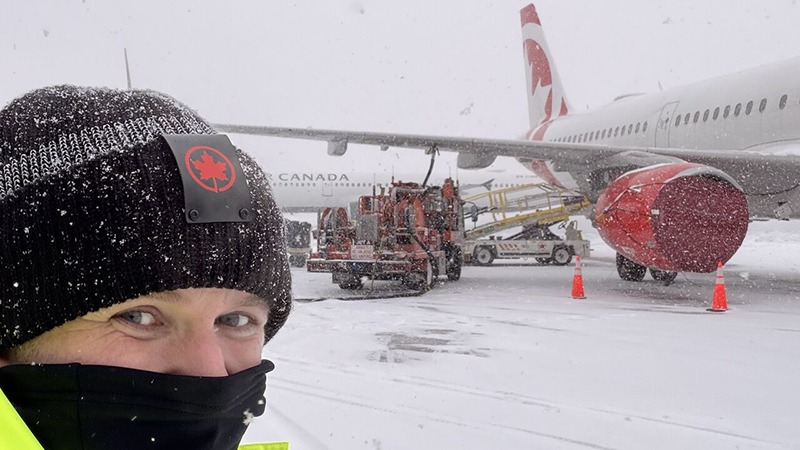
Keeping aircraft themselves healthy in that kind of cold is a major task. As each plane arrives, maintenance and ground teams connect it to large ground heaters – essentially industrial air‑conditioning units running in reverse, blowing hot air into the cabin and systems. Technicians fit bright red engine covers over the intakes to prevent snow from blowing inside, and monitoring software tracks temperatures across the aircraft systems to ensure everything stays warm enough to avoid damage. The goal is to keep each aircraft in an airworthy state so it can depart promptly once weather allows.

From One Extreme to Another
Planning further out to summer, Stevens notes that the carrier is continuously scanning long‑term forecasts, not only to manage winter storms but also to prepare for what is expected to be a record‑breaking heatwave summer. Extreme heat brings a different set of operational and safety challenges: protecting ground staff working around aircraft in high temperatures and, in some cases, imposing weight restrictions on departures when hot, thin air reduces aircraft performance on takeoff. Those scenarios, like blizzards, now figure into the airline’s ongoing operational and customer‑experience strategy.
For Travel Advisors
For travel advisors dealing with frustrated clients, Stevens offers a simple starting point: safety first, always. Air Canada will not depart an aircraft if it is not safe to do so, nor will it ask employees to operate in conditions that put them at risk.
Once safety concerns are addressed, the focus shifts to restarting the network. Complex global carriers like Air Canada have aircraft and crews scattered around the world, and it takes time to pull that system back into sync through hub operations and cascading flights.
The airline, he says, is working hard to adjust schedules as far in advance as possible so customers learn about changes before they reach the airport. Even so, the sheer complexity of the network means some customers may experience more than one cancellation as plans are continually refined, something Air Canada tries to avoid but cannot always prevent. Throughout, the core principle remains the same: operating safely for both customers and employees while restoring the schedule as quickly and predictably as conditions allow.
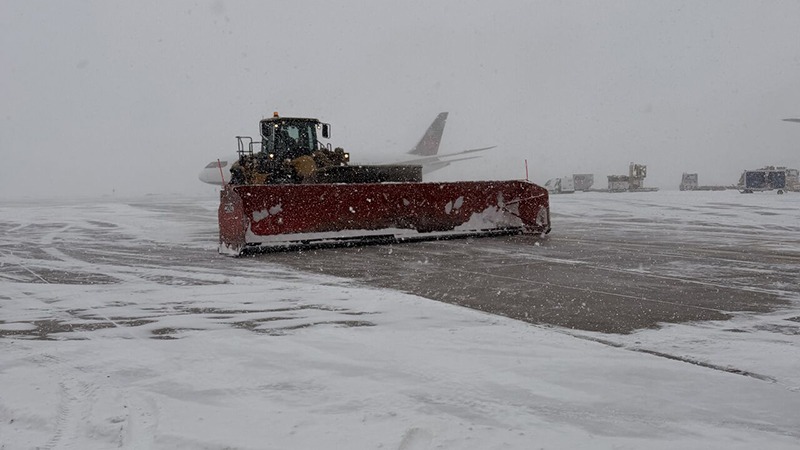
The storm’s sheer physical impact on Pearson is obvious even after the runways reopen. Stevens describes towering “snow mountains” that have been built up on closed departure gates and other parts of the airfield as plows push snow into collection areas. Excavators are now at work feeding those piles into industrial snow melters, which liquefy the compacted snow so the water can drain safely away through the airport’s systems.
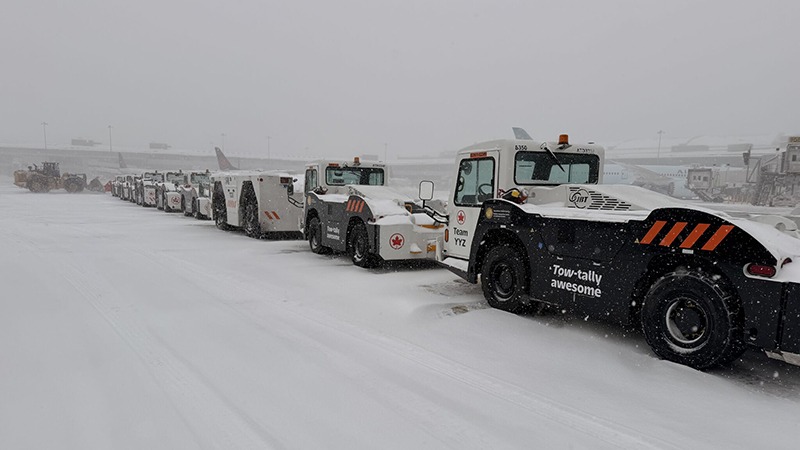
The equipment behind a “snowmageddon” clean-up is just as impressive as the storm itself.