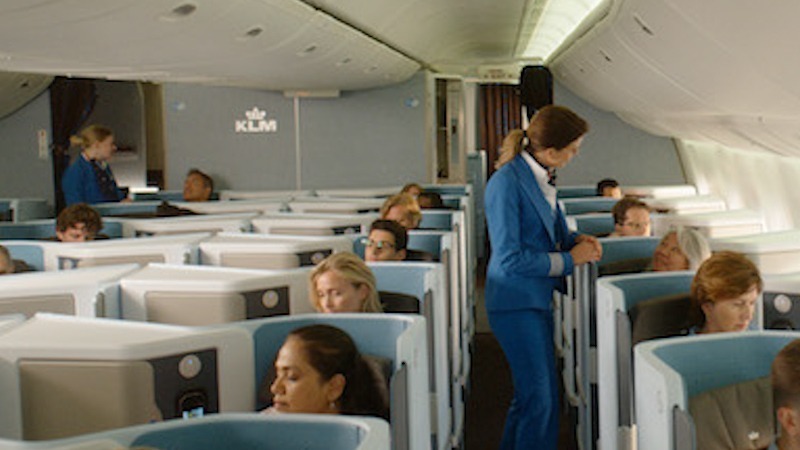
Imagine asking your business client to pay extra to sit in their preferred seat. To order a meal. Ensure priority boarding. Gasp!
Segmenting the front of the plane would have been utterly unthinkable not that long ago.
Delta has been hinting at unbundling business class fares for a few weeks. And now United Airlines is signaling that fare segmentation is coming to their premium seats.
Delta President Glen Hauenstein recently confirmed the airline is actively working on a more segmented approach to its business class offerings, known as Delta One. Speaking at a recent investor event, Hauenstein said, “The idea of unbundling, and giving more choice in the front cabin, is certainly something that we are very focused on.”
While Hauenstein didn’t specify what an unbundled business class might look like, he hinted at varying levels of service and amenities tied to different price points — much like the multiple tiers commonly charged for in economy class.
Meanwhile, United Airlines CEO Scott Kirby has also teased the possibility of a “basic” business class product, though he stopped short of providing specifics or a launch timeline. Kirby suggested the airline is exploring how to diversify its premium offering to capture a broader range of customers.
Although the real reason could be that unbundling economy lead to much greater profits for airlines and if it worked in the back, why not give it whirl up front?
Interestingly, it was Air Canada, under Robert Milton’s leadership back in 2002, which first introduced the concept of unbundled fares as a means to compete with lower-cost competitors such as WestJet. The trend caught on like free chips on a Porter flight. Within a very short time frame, all North American carriers adopted the bare bones pricing model.
It was just a matter of time before it was applied to premium fares. In fact, some carriers in Europe and Asia already offer stripped-down premium products with fewer perks in exchange for a lower price.
Is nothing sacred?