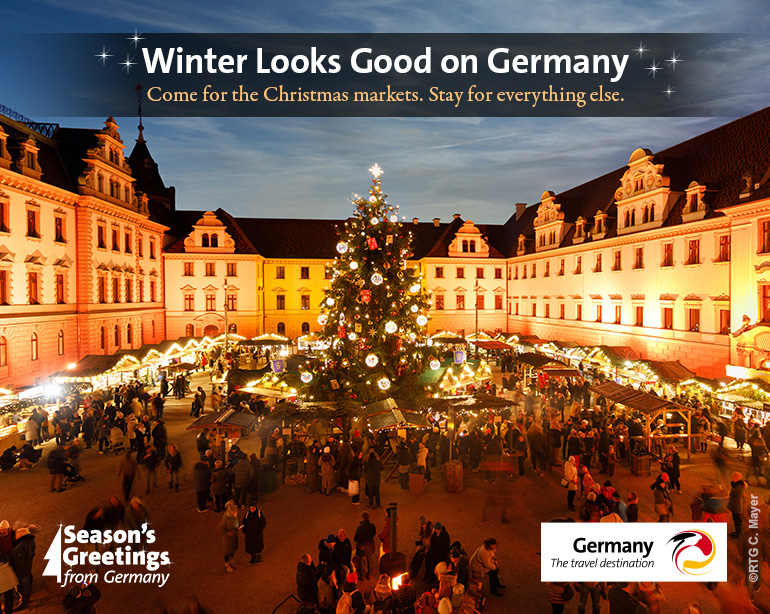
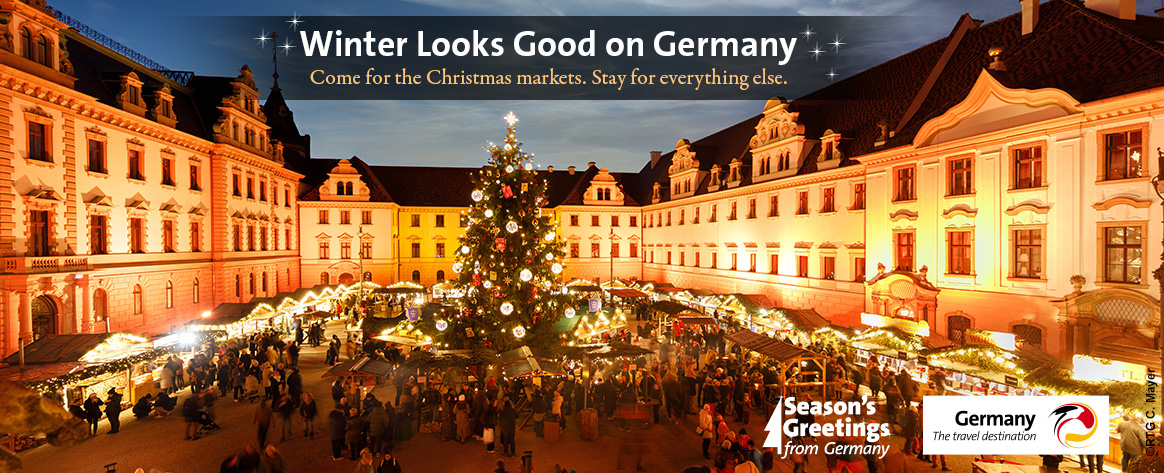

Germany’s Christmas markets are world renowned. They’re a feast for the senses—historic squares glow with lights, wooden market stalls fill city centres, and the scent of cinnamon, roasted almonds, and gingerbread drifts through the streets.
Traditional dishes and regional specialties become part of the experience, while handmade ornaments and woodcraft offer a tangible connection to local traditions.
Every Region Does Christmas Differently
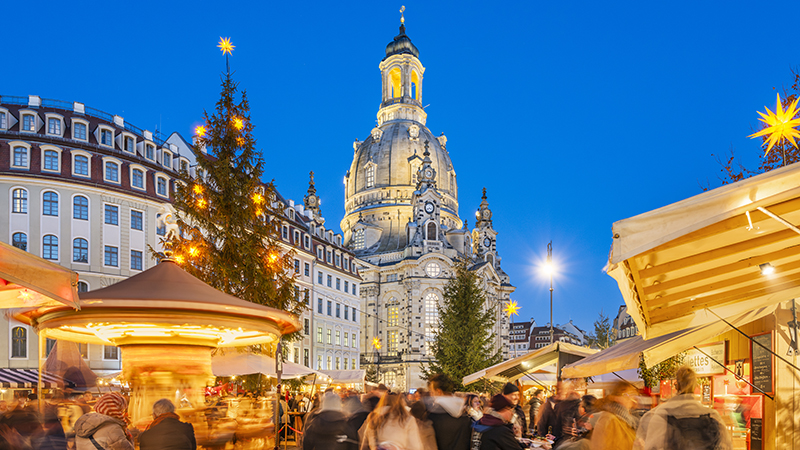
There is no single German Christmas-market experience. The atmosphere, traditions, and specialties change from one destination to the next, giving travellers a reason to explore more than one destination.
In Traben-Trarbach, Advent goes underground, with the town’s historic wine cellars transformed into a festive setting for the Mosel Wine-Nights-Market. Visitors can browse local crafts and regional specialties among the atmospheric old cellars, with Mosel wine naturally at the heart of the experience.
In Thuringia, Christmas traditions run particularly deep. The region is credited with originating the glass Christmas bauble, staging the first market Christmas tree, and inspiring some of the world’s most famous carols. Its Advent markets are often set against historic town squares and castles, adding another layer to the experience.
The Ore Mountains, meanwhile, are closely associated with distinctive wooden Christmas decorations and craftsmanship, a tradition visitors can see firsthand in the region’s carving workshops.
That regional variety makes a Christmas-market itinerary particularly well suited to clients who enjoy combining destinations. Rather than visiting one market and moving on, your clients can follow the traditions across different cities and regions, with each stop offering something new.
Food carries its own regional traditions. In Thuringia and Saxony, for example, potato salad and sausages are a classic Christmas Eve meal, while the following days bring more elaborate dishes such as roast goose with potato dumplings and red cabbage or carp.
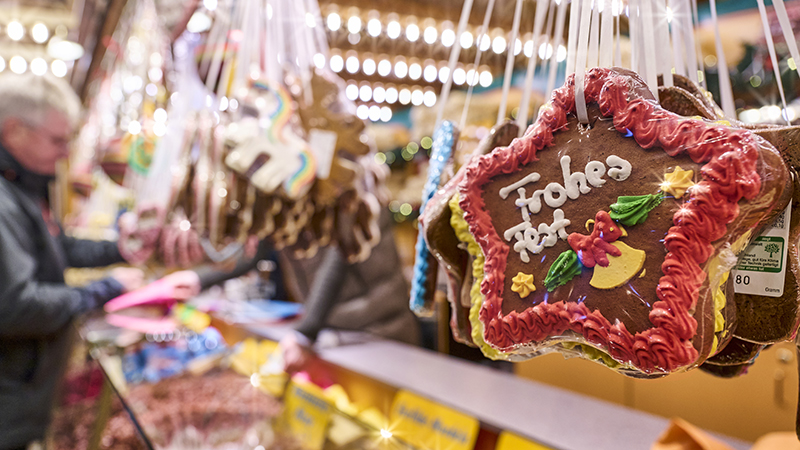
Nuremberg’s Christkindlesmarkt is one of the country’s best-known, with its historic setting and famous gingerbread, while Lübeck brings its own northern character with a long-standing love of marzipan. Dresden’s Striezelmarkt brings its own centuries-old traditions, including the city’s association with Christstollen.
Christmas in Germany isn’t just something to see in a market square, but woven into the food, customs, and everyday traditions of the places travellers are visiting.
Build the Market Into the Itinerary
A Christmas market can be the reason a client chooses Germany, but it doesn’t have to be the only reason they go.
A major city can provide the cultural anchor, with a smaller historic town or regional destination added for a more intimate Advent experience. Museums, concerts, opera, local dining, and UNESCO World Heritage sites can fill out the itinerary between market visits.

“Advisors can combine a major city with a smaller historic town, add a museum or opera performance, regional food and wine experiences, perhaps a spa stay, and even some winter nature,” Brokjans says. “My tip would be to build variety into the itinerary: culture and cuisine, city and countryside, famous highlights and lesser-known places. That is where Germany can really stand out as a winter destination.”
For clients travelling specifically for Christmas markets, that approach turns the market from a single stop into the starting point for a much larger holiday itinerary. And with traditions varying from region to region, there is plenty of room to make each itinerary feel distinctly its own.