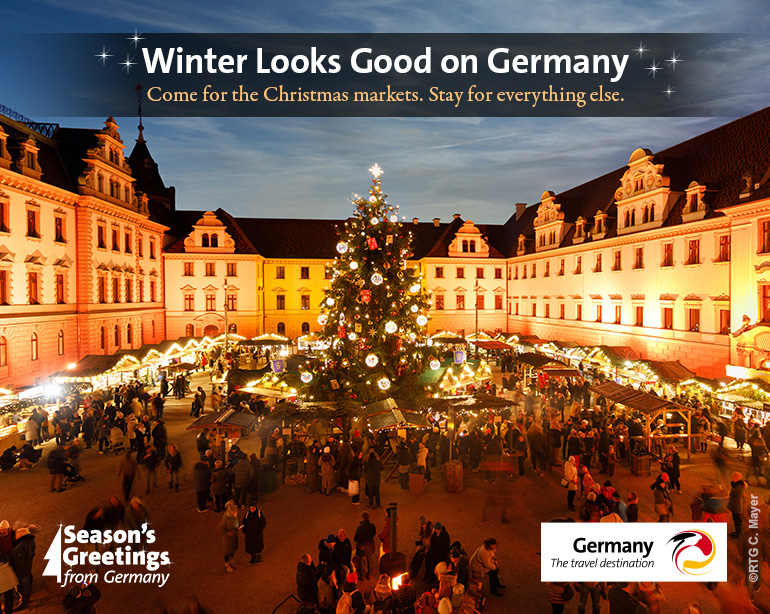

Germany in winter has a different rhythm. Historic city centres feel quieter, landscapes take on a new character, and the season invites travellers to linger.
“I think one of the biggest opportunities is not to sell Germany in winter only through Christmas markets,” says Anja Brokjans, Director, Marketing & Sales for the German National Tourist Office. “Christmas markets are wonderful and absolutely worth travelling for, but think of them as the starting point for a much richer itinerary.”
So, what’s waiting beyond the market stalls?
Winter Has Its Own Kind of Magic
A German city break can move easily between old-world streets and cozy indoor nooks.
Well-preserved old towns, medieval architecture, and UNESCO World Heritage sites provide a backdrop for slow wandering, while museums, cafés, and traditional restaurants give travellers plenty of ways to warm up indoors. Goslar, Quedlinburg, and Regensburg, for example, each bring their own mix of historic architecture, local culture, and walkable city centres.

©Quedlinburg-Tourismus-Marketing GmbH/Nico Reischke
The experience can shift with the setting. Saarbrücken pairs its historic streets and riverside setting with an easy connection to France, while Bremen has a maritime character. In Eisenach, history takes a more dramatic turn with Wartburg Castle rising above the town.
Even better-known destinations can reveal something new in winter. Nuremberg, for example, may be synonymous with its famous Christmas market, but its Imperial Castle, museums, historic streets, and traditional restaurants make it worth exploring after the stalls have closed.
Variety: “One of Germany’s Strengths”

©GNTB/Günter Standl
Forests and mountains open the door to snowshoeing, winter hiking, tobogganing, and skiing, while spa experiences offer another way to embrace the season.
“Germany is great for people who like combining experiences. You don’t have to choose between a city break and nature. You can spend a few days in Berlin, Frankfurt, or Munich, and then add a smaller historic town, a spa destination, the mountains, or the countryside. That variety is one of Germany’s strengths,” says Brokjans.
©GNTB/Torsten Krüger
Winter sports range from downhill skiing and tobogganing in the Bavarian Alps to cross-country trails through forested mountain landscapes. Around Garmisch-Partenkirchen, the Zugspitze offers spectacular alpine views, while the Thuringian Forest provides a quieter setting for snowshoeing, winter hiking, and cross-country skiing.
“Germany has so much to offer in winter, from vibrant cities and Christmas markets to wellness, culture, and beautiful natural landscapes. One region I think deserves more attention from Canadian travellers, for example, is the Harz Mountains,” Brokjans says.
The Harz Mountains are particularly suited to combining nature with history, with UNESCO-listed sites, ski slopes, toboggan runs, hiking trails, and around 500 kilometres of cross-country trails. The Harz Narrow Gauge Railways offer journeys through the landscape aboard historic trains, including steam locomotives travelling towards the Brocken.

©GNTB/ Francesco Carovillano
With more than 350 spas and health resorts across Germany, wellness is a significant part of the country’s travel offering. In Baden-Baden, for example, 800,000 litres of hot, mineral-rich water rise to the surface every day from a depth of around 2,000 metres, feeding the city’s famed thermal baths.
5 Quintessential “Germany” Experiences Worth Bundling Up For
From active adventures to offbeat finds, here’s a snapshot of five unique experiences that capture Germany in winter at its best—and none of them are Christmas markets!
- Hop aboard a husky-drawn sleigh ride, offered in several parts of Germany, including the Rhön, the Black Forest, Lower Saxony, and the Harz Mountains.
- Go on a GPS Scavenger Hunt, available in several cities like Hamburg, and cozy up in a café afterwards.
- Vineyards aren’t just gorgeous during the grape harvest! Go on a torchlight hike through the vineyards of the Rheingau or Kaiserstuhl.
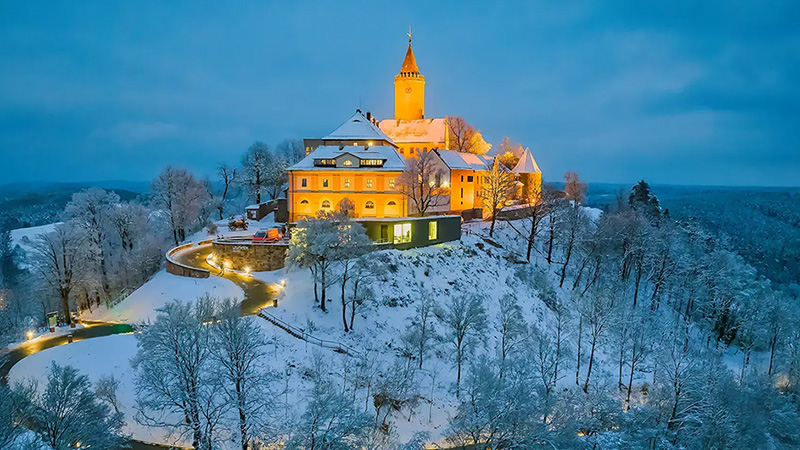
- Step into your own winter fairytale at one of Germany’s many castles. Neuschwanstein Castle in Bavaria, the snow-covered Moritzburg Castle near Dresden, and Hohenzollern Castle are standouts.
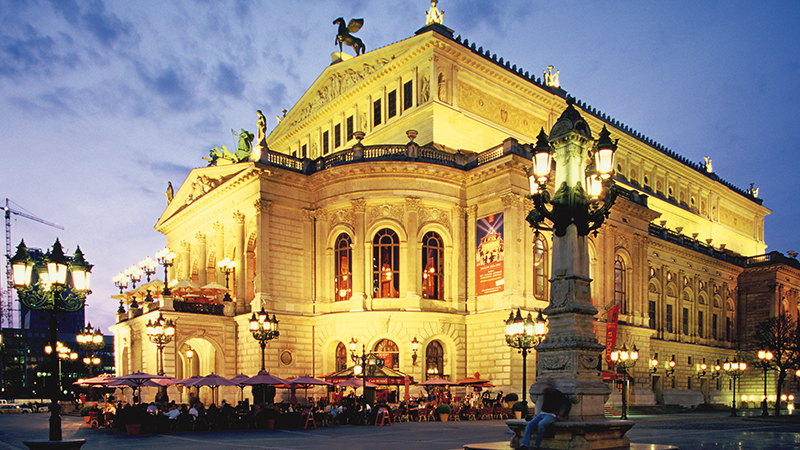
- Visit Frankfurt’s Palmengarten botanical garden, where the butterfly house attracts visitors in the winter months with over 60 species of butterflies.
A Winter Worth Lingering Over
The beauty of a winter getaway to Germany is how seamlessly it adapts to different types of travellers looking for an authentic seasonal escape.
“I think Canadians are very well suited to Germany in winter because we are certainly not afraid of putting on a coat! But particularly, I would recommend it for travellers who enjoy culture, food, and cities, rather than someone looking exclusively for a beach escape. It’s ideal for couples, families and friends travelling together or repeat visitors to Europe who are looking for something a little different,” says Brokjans.
For advisors, that range is the selling point: a single itinerary can move from a snowy city break to a mountain spa town without ever feeling repetitive, giving clients more reasons to add extra nights.