As WestJet staff start to return to normal operations after its flight attendants went on strike this past weekend, one aviation expert says the fight has been five years in the making.
The dispute between the union and the airline goes back to 2021 when duty-pay was pitted against block-pay.
According to Robert Kokonis, president of AirTrav Inc., at the time, flight attendants were on a duty‑pay system, in which every part of the workday was compensated, including boarding, delays, cabin preparation, and flight time. However, overall pay wasn’t competitive because each component was paid at a lower rate.
So in 2021, flight attendants pushed to move to block pay, the pilot‑style model where wages only start when the aircraft pushes back from the gate and stop when it arrives. The hourly rate under block pay is higher, and cabin crew initially earned more, said Kokonis.
But block-pay excludes all ground duties, and by 2026, flight attendants argued they were now performing dozens of unpaid hours each month.
Air Canada’s agreement in August of 2025 to recognize ground time set a new industry benchmark, and WestJet’s crew wanted the same, even though the union previously agreed to give up ground pay, said Kokonis.
"So fast-forward to the year 2026. Now the union's saying, 'Oh no, we're not being paid for this ground time. We want that to be recognized.' Well, no, you agreed to that back in 2021, this changed formula.
"I think the company [felt] they agreed to a change in the formula to compensate ground time five years ago."
According to CUPE local 8125, which represents the WestJet flight attendants, said Canadians "overwhelmingly support" in their "fight for fair wages and an end to unpaid work."
In an Abacus Data survey commissioned by the union and released on 29JUL, 64% of respondents said they supported flight attendants in the dispute.
Most respondents also said they believed WestJet could afford to pay its flight attendants for their ground work.
Kokonis, however, pointed out the slim margins airlines make.
"If you go back to 2007 ... it was the most profitable year that decade, and the average profit margin for 250 carriers in the International Air Transport Association, IATA, was 0.3%. Three‑tenths of one per cent."
Since WestJet is privately owned, it's unclear if the airline made a profit in 2025. However, credit agency Fitch Ratings said the airline generated near break-even operating margins in 2025, compared to others like Delta Air Lines, which boasted a 9% profit that year, according to AviationNews.
The union did not disclose the terms of the tentative deal, saying they need to take the offer back to their members for a ratification vote, which must happen within 30 days.
However, the deal “improves on the long-standing flight credit system by recognizing more of the work that cabin crew are required to perform, and increasing the compensation for that work,” said union president Alia Hussain at a press conference in Calgary Monday.
Return to normalcy
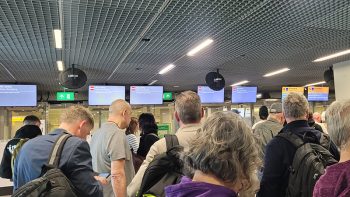
Advisors should know that WestJet is now in recovery mode, and that clients will still see disruptions and delays as operations recover.
While WestJet said fewer than 700 flights were cancelled, FlightAware and Cirium show more than 900.
Either way, it will likely take several days before airline traffic in Canada returns to normal. After Air Canada's strike in 2025, the airline warned it would take several days for operations to normalize because aircraft and crew were out of position.
The airline reported they had nearly restored their full fleet and schedule five days later.
The airline says it is processing rebookings and refunds. While WestJet has extended its flexible change policy through 06AUG, communications are backlogged.
WestJet CEO Alexis Von Hoensbroech said teams are working to restore service as quickly as possible.
“We know this disruption has been frustrating for our guests and WestJetters and we're sorry for that," he said in a statement.
Meanwhile, the tourism industry says two strikes at two major Canadian in two years is too much.
The Tourism Industry Association of Canada released a statement on Sunday, noting the blow to Canada's travel reputation.
"Coming less than a year after the Air Canada labour dispute, this latest shutdown poses serious risks to travellers, communities, Canada’s $140-billion tourism industry and the country’s reputation as a reliable destination."
Kokonis called the strike "unfortunate" for consumer confidence.
"People start asking themselves, 'Should I even book this trip? Is my flight going to operate? Am I going to be stranded somewhere?' That’s not healthy for tourism. It’s not healthy for the airline. It's not healthy for the employees either because uncertainty creates stress for everybody involved."