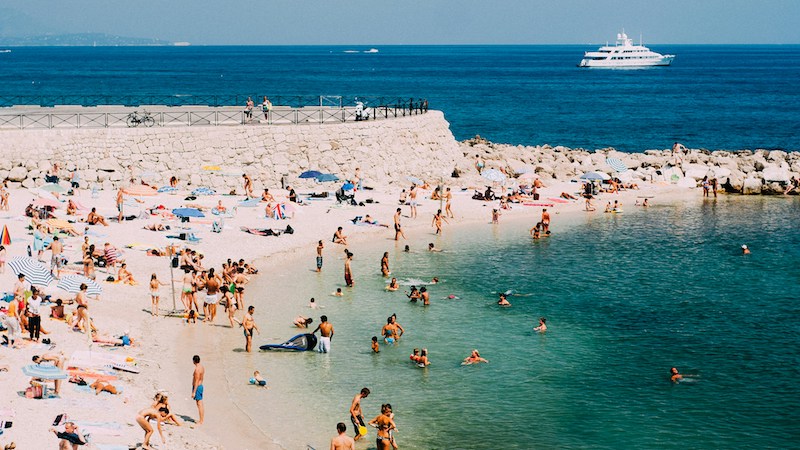
Drownings, dehydration and emergency cooling stations sound like scenes from a disaster movie, but they’re the reality in Europe as a heat dome parks over the continent for the second time this year.
Météo-France is reporting a record-smashing temperature of 45.9C last Friday, making the French town of Gallargues-le-Montueux only slightly cooler than the Sahara Desert.
Spain is also suffering under oppressive heat. Aemet weather service says temperatures are on track to exceed 44C in rural areas near Córdoba, while in the Ebro valley in the country's north-east is forecast to reach 42C later today. Andújar recorded a record temperature of 45C yesterday.
Some Germany cities are predicted to hit 40C in the coming days as well, while traditionally cooler countries, like Bulgaria and Romania, are also experiencing higher than usual temperatures, with the mercury edging towards 40C.
To curb heat-related injuries and prevent deaths, Le Monde reports that France has banned the public consumption of alcohol across most of the country, while CNN reports that Spain has closed outdoor FIFA World Cup fan zones.
Over the last seven days, 40 drownings have been linked to the heatwave in France alone, according to a report from the BBC. Heat-related drownings have also been reported in Italy, Germany, Spain and the UK, which is also on track to break existing heat records this week.
Fifteen Italian cities, including Rome, Milan, Florence, Turin and Venice, are under a government heat warning as well, with officials warning that the high temperatures pose a risk to everyone, including healthy adults.
Air conditioning is not common in Europe, and with temperatures remaining high overnight, people have few ways of cooling off.
EuroNews reports that tourists are altering their schedules in an attempt to avoid the heat, visiting sites and monuments in the early hours of the morning or later in the evening when possible.
Many municipal governments have also set up cooling stations that include high-pressure mist, but travellers and residents are advised to monitor for signs of heat stroke, drink plenty of water and seek air conditioning when possible.