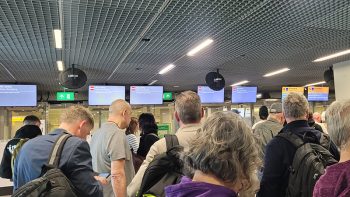
Airports across Europe are bracing for potential gridlock when the European Union’s new Entry-Exit System (EES) goes live on 12OCT—a change that aviation experts warn could trigger hours-long delays, especially at some of the continent’s busiest hubs.
The EES marks a major change in border management across the Schengen Area, introducing biometric registration for non-EU travellers amid growing concern that the first few months may push airport systems to their breaking point.
What Is the EU Entry-Exit System?
The EES is a long-delayed measure affecting all Schengen Zone countries, as well as Norway, Iceland, and Switzerland, but excludes Ireland and Cyprus.
Under the new protocol, visitors from outside the EU must undergo biometric registration at their first point of entry. This requires providing both fingerprints and a facial scan, except for children under 12, who are exempt from fingerprinting. While this process is intended to streamline repeat border crossings down the line, initial registration is expected to result in longer queues and processing times.
Early Signs Point to Substantial Delays
Experts warn airports with a continuous flow on non-Schengen arrivals such as Athens, Bucharest, and Milan Malpensa are among those most at risk of "collapse" during the first weeks of EES implementation.
During EES trials, biometric checks reportedly took up to four times longer to complete than current passport controls.
Double Red Tape: Biometric and Passport Checks
The EES will not entirely replace existing procedures: for the initial 180-day rollout period (until 09APR, 2026), travellers face so-called “double red tape” at the border. This means that after submitting biometrics at automated kiosks, passengers will still need to queue for traditional passport checks and manual stamping by border officers.
Though well-prepared airports can handle smooth operations when schedules proceed as expected, the real threat is compounded delays—for instance, if arriving flights are late and line-ups build beyond capacity. If backlogs grow unchecked, there is a risk that flights could be held on the ground or even cancelled, with knock-on effects spilling over into departures and affecting travelers not subject to Schengen checks.
Flexibility and Emergency Procedures
Recognizing these risks, the EU has abandoned a simultaneous “big bang” approach in favor of a phased, flexible rollout across member states. Authorities at crowded airports may temporarily suspend biometric checks or allow up to 90% of travelers to bypass registration if queues become unmanageable.
Preparing for Change
Airports, airlines, and passengers alike are being urged to plan for extra border processing time in the months ahead.