As US President Donald Trump ramps up tariff threats, Canadians are avoiding trips to the States in droves. The level of anger towards US politicians among the Canadian public has perhaps never been higher. Against this backdrop, how do US destinations promote tourism to its biggest source of foreign visitors?
Open Jaw recently contacted several destination marketing executives and public relations managers to see how they’re handling the delicate task of selling a country to a nation that feels it’s under attack.
Here’s a sample of what they had to say.
DAVID WHITAKER, PRESIDENT AND CEO, GREATER MIAMI CONVENTION AND VISITORS BUREAU

David Whitaker was previously head of Tourism Toronto for eight years. For him, the Canada-USA dispute is a little more personal than it might be for other US destination marketing execs.
“That was my family and my town and my country for eight years, so the context is unique for me. I don’t speak for our government, I don’t speak for politicians, I speak as someone who had an eight year love relationship with Toronto, and I’m tremendously saddened that we’re in this situation. I would not be sincere if I didn’t say how sad this makes me feel.”
Whitaker told Open Jaw the current situation is not a crisis. At least not right now.
“I won’t use the word crisis yet,” he said. “There are endless lists of crises, things like COVID-19 or hurricanes or airline strikes or civic unrest. We are thinking about trying to determine if and when and how this may be a crisis. It’s a little premature” as the facts are still being compiled on cross-border traffic and foreign visitation to the States.
For now, Whitaker said the Miami team is talking with tour operators, airlines, government partners, Visit Florida, and others with a stake in the issue.
Asked if he’s seeing any big drops in Canadian visitation to the US, Whitaker replied, “Well, if you use the simple adage of ‘Where there’s smoke there must be fire,’ there’s an awful lot of smoke.”
I mean, you’d be foolish not to notice. It’s billowing. It’s deeply concerning.
So how does a destination in the US market itself to an audience that’s booing the US national anthem at sporting events?
“You have to be sincere and you have to be authentic,” he said. “I would liken it to dealing with a hurricane. You don’t’ say everything’s fine and the zoo is open again when animals are running amok.”
Whitaker said he thinks there are “a lot more chapters to this book” that we don’t yet know about.
“We also know there are a variety of end games that have nothing to do with tourism. There are trade issues and military alliance issues, resource sharing.
“I compare it to suffering a major cut or a major wound,” he said of the current dispute. “It doesn’t heal overnight. And you can’t rush the healing process, or it will have a negative effect. You have to let its run its course.”
Whitaker said that, hypothetically, it may be November before a Canada-US trade agreement is hammered out.
“And, by the way, let’s use the word hammered for what it really means. This is not a velvet glove strategy. So, you have to kind of comfort yourself by saying, ‘There is an end game here. There is a bigger picture.’”
November is a long way off. Winter tourism campaigns for sun destinations like Miami often begin in October or even September.
“Can we in the tourism industry wait until November to see where it all ends? Not necessarily,” Whitaker said.
The Greater Miami CVB has an always-on strategy that involves technology and social media strategies. That means they don’t necessarily have to pause their marketing efforts.
“It’s not like we’re buying full page ads,” he said. “We have an ‘always on’ strategy and it will stay on.”
SUE WEBB, PRESIDENT, VoX INTERNATIONAL

Sue Webb of VoX International said her team is “taking a thoughtful and empathetic approach” to the issue, and has also paused some marketing efforts.
“We are keeping our US clients (including Florida, Texas and Hawaii) updated daily about consumer sentiments and booking trends by Canadian travellers to the USA. We are keeping in touch with our partner airlines, tour operators, media, industry associations, travel agents and hotels so that we can provide updated information so that we can develop the strategies of how to market the destinations to the Canadian consumer and travel trade member.
“We don’t want to appear ‘tone deaf’ with what is happening politically between our countries as it is so emotional for Canadians, so we are pausing some marketing and changing our message to let Canadians know they welcome when they are ready and that they (US destinations) love Canadians.”
Webb told Open Jaw that VoX also has shifted its marketing for Hawaii.
“For Hawaii we now promote that the islands are part of Polynesia and the Pacific.”
As for marketing the US as a whole, Webb said VoX’s strategy “is to promote the experience Canadians can enjoy in our US destinations whether it be sporting events, concerts, Broadway shows, dining, outdoor adventure, family fun, attractions or beach vacations rather than highlight where the destination is located.
“By focusing on the experiences that Canadian travellers can enjoy in US destinations and highlighting special offers, we are creating a space for Canadians to feel welcomed and appreciated without dismissing the emotional context. Many of our hotel partners in USA destinations, including Hawaii, Florida and Texas, are promoting special Canadian offers with the message ‘we love Canadian visitors.’ This is a positive message especially with the exchange rate a challenge now as well.” said Webb, who’s also president of the board of directors of Discover America Canada.
US TRAVEL ASSOCIATION
The US Travel Association, which is charged with lobbying the US government and creating a positive environment for international travel to the States, issued a statement last week.
“The travel industry is seeing concerning trends in both domestic and international-inbound travel,” the association said, citing as contributing factors a strong U.S. dollar, visa delays, concerns about safety and travel restrictions and “a question of America’s welcomeness.”
“These challenges are real and demand decisive action,” the statement reads. The association also said it is “actively working with the White House and Congress to advance policies that drive economic expansion and keep the U.S. competitive on the global stage.”
CNBC contacted the White House on 28MAR to ask about concerns that foreign visitors are shying away from travel to the States.
“Everybody wants to come to President Trump’s America,” a White House spokesperson replied, adding that Canadians “will no longer have to endure the inconveniences of international travel when Canada becomes our 51st state.”
Comments like that certainly don’t help build enthusiasm for US travel in the critical Canadian market.
CHRIS HEYWOOD, SENIOR VICE PRESIDENT, PUBLIC RELATIONS AND CHIEF COMMNICATIONS OFFICER, BRAND USA

“Canada has long been a part of our business, and we really value Canada and our friends to the north,” said Heywood, formerly the head of media relations for the tourism boards of both New York City and Los Angeles. “We remain 100% committed” to the Canadian market.
Heywood made the point that Brand USA is a marketing organization and not a political or advocacy group like the U.S. Travel Association. That being said, Heywood told Open Jaw they’re not slowing down their efforts in Canada.
“We’re not taking our foot off the pedal,” said Heywood, who plans to visit key tourism officials and members of the media this month. He also noted that Brand USA’s Connect East takes place in Toronto and Montreal 28APR to 02MAY, while Connect West will be held Calgary, Edmonton and Vancouver 20MAY to 23MAY.
No major Brand USA marketing campaigns were planned for this time of year in Canada, so they haven’t pulled back on anything.
“When things improve, we may look at ways to amp that up,” he told Open Jaw.
Heywood noted that Brand USA has an executive (Casey Canevari) dedicated to working with Canada on the trade side. They also recently announced that Faulhaber Agency will handle their media relations north of the border.
“We hear you,” he said when asked about Canadians reaction to the proposed Trump tariffs. “We’re committed to the markets. We understand what the sentiment is now. We remain committed. We have a kinship with Canada, and we expect that to continue. We’ve been in close touch with our airline partners, our trade partners. We’re doing what we can to navigate this.
“We’re in this for the long game and Canada’s our number one market. We’re not going anywhere.”
GREG MARSHALL, TOURISM REP, UPSTATE NEW YORK
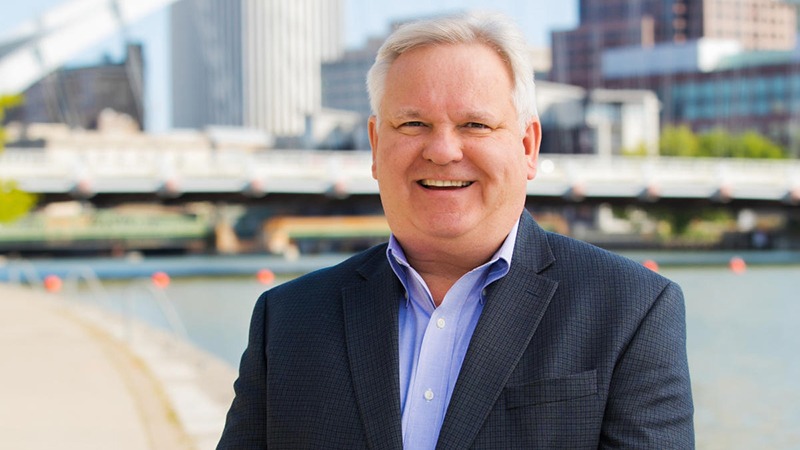
“This environment is staggering from a business view, but are also deeply sad personally,” said Marshall, who until recently was on the board of Discover America Canada. “I concur that in my 45 years cultivating Canadian tourism, I've never seen nor experienced what we now face.
“There is no doubt the current US administration is aware of the impact that talk and tariffs have had thus far on Canadian tourism to the US. The Administration has also been provided with dismal predictions for the future if the course is not corrected.
“Sadly, I've heard no good news as a result.”
MILTON SEGARRA, PRESIDENT AND CEO, DISCOVER THE PALM BEACHES
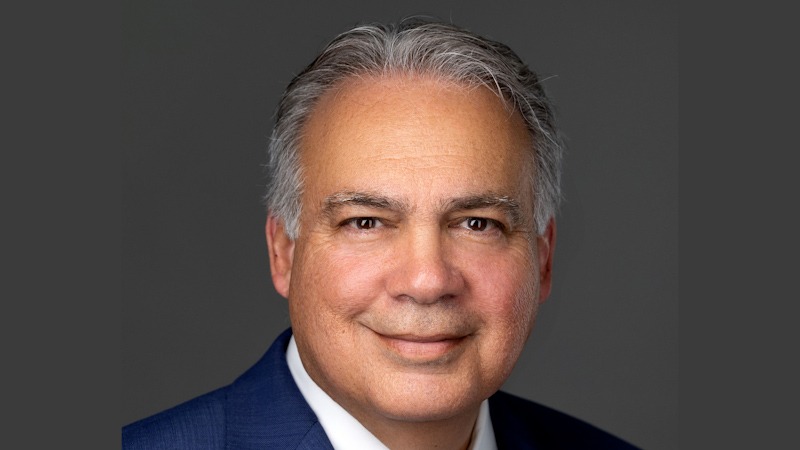
Segarra recently attended a Palm Beaches tourism event in Toronto. He hadn’t planned on coming north, but felt it was important to meet with key partners in person given the difficult times between Canada and the US these days.
“Never in my life did I envision something like this,” he told Open Jaw. “We have gone through pandemics. We have gone through so many things, but never something like this. “
Segarra said Discover Palm Beaches ads in Canada have been paused through May of this year.
“This is not the time to push. We’re monitoring consumer sentiment. When the time comes, we’ll be ready.”
JOHN PERCY, PRESIDENT & CEO, VISIT NIAGARA USA

“Do you put on events in Canadian cities or put out ads, or is that tone deaf right now? I have had this debate with others and my team,” Percy said in an email. “Do you pull out completely or do you stay strong and present even in the midst of this storm!? I am getting various opinions and sides.
“I believe that tourism, travel and hospitality are the tools in which to unify one another. It is the one thing that people can agree on and that is not a political weapon, but rather something we can equally agree on and use to unify, even in this time of disruption. Travel is resilient and it is easy to boycott a tangible product like bourbon. But can people live without travel!?"
ARIZONA TOURISM

Arizona tourism was in Toronto a few weeks ago to meet with trade partners and the media.
“We wanted to show love and appreciation for all your visits in the past and future,” Marjorie Magnusson, Media Relations Manager with the Arizona Office of Tourism, told Open Jaw. “We’ve been coming to the Canadian market for a while, and it is still an important market. We don’t want to turn our backs. We cherish the friendship.”
For now, Arizona is easing up on its marketing efforts in Canada for “a few months.”
Charmaine Singh, President & CEO of Toronto-based Reach Global Marketing, which represents Arizona, New York City and other top US destinations, doubled down on the enduring appeal of the States. She noted that despite economic and political tensions, the US remains an attractive destination for many Canadian travellers.
LAS VEGAS CONVENTION AND VISITORS ASSOCIATION

The LVCVA recently held an event in southern Ontario to talk about the great attractions in Vegas.
“While we understand the uncertainty in the market at this time, we’re here to show Canada that Las Vegas is ready to welcome Canadians when the time is right,” Brea Williams, LVCVA’s international market executive, said at the event.